Friday, 21 August 2020

THE DIFFERENT GALVANIZING METHODS AND INDUSTRIES USE GALVANIZED STEEL

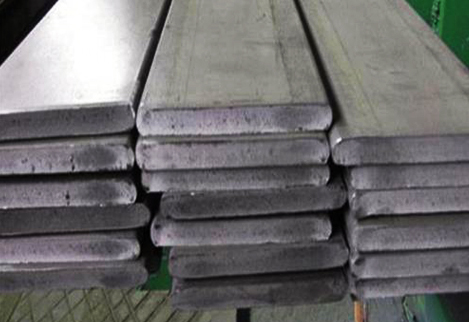
 There are several different processes for galvanizing steel Flat Bar.
1

Annealing process

Galvanizing is the result of the Stainless Steel Fabrication Singapore and hot-dip galvanizing processes to produce a specialized coating on steel. The galvanizing process is performed by hot dipping and instant annealing, resulting in a matte gray finish.

Galvanized Stainless Steel Pipe is a zinc-iron alloy product, where the base metal is coated by the hot-dip process and then heated to induce an alloy between the molten zinc coating and the steel. The resulting finish is a mat and dull surface. Galvanized steel is suitable for welding, and the surface is excellent for paint adhesion.

Pre-galvanizing

Pre-galvanizing is a process of rolling Stainless Steel Plate through a cleaning agent to quickly prime the material to be galvanized. Then the metal is passed through a bath of molten liquid zinc and is immediately rewound. The main advantage of this method is that the steel sheet coils can be quickly galvanized on a large scale with a more unified coating than the traditional hot-dip method.

Electro galvanization

The most unique of these methods described by Metal Works Singapore, electro-galvanizing, does not involve soaking the material in a molten zinc tank. Instead, an electric current is introduced into an electrolyte solution applied to the steel, which reduces the positively charged zinc ions to metallic zinc. The zinc is deposited on the positively charged steel. Like pre-galvanizing, this method is usually applied during the first stage of production.

Which industries use galvanized steel?

Galvanized metals are used everywhere!

Some drinking water pipes are still made of Stainless Steel Singapore. The cold-rolled sheet is also frequently galvanized. Nuts, bolts, tools, and wires of all kinds are now galvanized because it is a cheap process that increases the life of the metal.

Galvanized steel, in particular, is often used in modern steel frame buildings. Galvanized steel is also used to create structures like balconies, verandas, stairs, ladders, walkways, Angle Bar, etc. Galvanized metal is a perfect choice if your project is to live outdoors when completed. Fences, roofs, outdoor walkways, there are so many choices for galvanized metal!

Wind and solar industries

Solar projects should have a continuous workflow once installed, and any repair/maintenance results in service disruption (aka loss of revenue). This means that hot-dip galvanized steels are popular in Steel Company in Singapore for their protection against corrosion. It is appreciated for its respect for the environment because it produces no emissions and allows for decades without maintenance. For example, it is often used in the agricultural industry because the equipment is susceptible to corrosion easily, which creates a demand for stronger and more flexible equipment

Automobile industry

Although it was only used on luxury models until the 1980s, the use of Hollow Section zinc-plated bodies for automobiles is now standard in automobile manufacturing. The white body of a car makes up about 80% of the body, all made of galvanized steel.

Telecommunications industry

Telephone lines are not easy to maintain. Hot-dip galvanized Chequered Plate steel can be used for telephone wiring and equipment boxes, reducing the risk of damage and the need for maintenance.

Friday, 14 August 2020

What are the processes of metal fabrication

 Manufacturing is the act of taking raw materials and converting them into parts used in the assembly process. There are different types of Metal Fabrication Singapore. The most common is

Cutting

Folding

Machining

Punching

Shear

Stamping

Welding

Additive manufacturing

Let us have a glimpse at the kinds of manufacturing processes here.

Cutting

There are many ways to cut today. Old resources are saws. Others include plasma flares, water streams, and lasers. There is a whole range of complexity and prices, with some machines costing millions of dollars.

Folding

Some parts need to be folded. The most common method is the press brake. There is a series of dies that pinch metal to form creases. This function can only be made in very special cases by Aluminium Supplier In Singapore. This is possible due to the range of motion of the part during the bending process and the possible geometry of the die. However, a lean manufacturing design helps prevent complex geometries that delay production. Two different manufacturing processes or combinations of two different parts can work better than complex parts.

1

Machining

This is the procedure of separating metal from a material. This can be done on a lathe where the material rotates relative to the cutting tool. It can also be done by cutting machine where the rotating tool moves in different ways relative to the stationary part. Exercises fall into this last category. The number of axes defines the working limit of the cutting head.

Punching

 Punching is the action of a punch and a die, which creates a scissor effect in the metal and makes a hole in it. The punch and die should be the same shape and size as the desired hole. In some cases, key material may remain, such as when fastener holes are added. In other cases, the removed part is the desired product. This is called a deletion.

Shearing

Cutting is the process of making a long cut in a piece of metal. Indeed, it's like one action of those long-time-processed paper cutters. This is done with sheet metal.

Stamping

Stamping is very similar to punching, except that the material is not cut. The die is shaped to make a higher portion of the material rather than penetrating it.

Welding

Welding is the union of two metal portions. There are different types of use in different applications and welding of different metals used in manufacturing.

Additive manufacturing

This is a relatively new technology by Stainless Steel Supplier Singapore. In reality, the machine applies layers of material to form the part. It works like a 3D printer that manufactures components from plastic, but on a much larger scale than regular printers, with a variety of materials available. They can even be large enough to produce an entire house. The shape of the generated components can be limited by the effect of gravity on the flowing material before it becomes rigid.

There are many other types of manufacturing processes that are less common than those listed above. New types of manufacturing methods are constantly being developed.


Friday, 7 August 2020

Mechanical properties of metals and alloys

 The carbon content determines the mechanical qualities of steels, the most characteristic of which is the hardness obtained by the quenching process. Depending on this carbon content, a distinction is made between mild steels (C22) and semi-hard steels (C35 and C45). The carbon content also determines the weldability of a metal. A carbon rate greater than 0.40% requires taking precautions. The more carbon steel has, the harder it is, the lower its degree of weldability.

Other properties had to be researched to meet the needs of the industry—for example, elasticity.

Elasticity is the property that metal has to undergo a temporary deformation under the action of an appropriate force. Then to return to its initial dimensions, Steel Supplier Singapore has to remove this force. It is thanks to the elasticity of metals that we can use tools without permanently deforming them. The elastic limit represents the point from which the part is permanently deformed.

1

Mechanical tests

If by inheritance of know-how or habit, the user knows which steel to use, it remains too empirical in many applications. Thus, various mechanical tests make it possible to determine the steel suitable for a defined use. Some tests measure the ability of a material to bend, to stamp ... Other tests measure:

- The resistance of a metal to penetration forces (hardness test).

- Its elasticity (tensile test)

- Its impact resistance (toughness) and its fragility (impact test)

It should be noted that today the manufacture of steel is controlled. The Mild Steel Supplier Singapore knows with precision their behaviour and, therefore, their physical constants, which have been established by a multitude of tests. Also, steels are isotropic materials: they react in the same way to stresses made in all observation directions.

Hardness testing: Brinell indentation or penetration methods

The test consists of balling a metal, i.e., driving an extra hard steel ball onto its surface, measuring the imprint left by the ball using a ruler, and reading its hardness on aboard. The hardness of a metal, symbolized by the letter H is the resistance it offers to penetration efforts. This test has the benefit of being possible in workshops. The device used to measure hardness is a durometer.

Other hardness measurement methods also exist in the Vickers method (a diamond replaces the ball) used for very hard metals or the Rockwell method (HR).

Tensile strength tests

A simple way to characterize the behaviour of the steel is to perform a tensile test. The concept of resistance translates both the concept of resistance to deformation and the tensile strength.

The test consists of stretching a sample of metal called a test piece, measuring its elastic limit point, and its elongation until it breaks. When you stretch steel, you first enter its elastic zone: the metal can return to its original dimensions. Then, Metal Supplier Singapore reaches the point of the elastic limit (Re). Beyond that, the metal deforms, hardens, micro cracks appear: the elongation ceases to be temporary and becomes permanent. The metal is work hardened. It is in the so-called plasticity zone.

Friday, 31 July 2020

How to Select Best Stainless for Any Purpose

For a product such as a pipe, stainless steel is the most popular material due to its unique properties. Stainless Steel Pipe is used in a wide variety of industries and is produced in various types. To determine whether a pipe suits you. You need to know its profile, thickness, grade of steel, and the technology by which it was made.


When deciding on a purchase, keep in mind that the cost of a stainless steel pipe will consist of the following factors:
    • steel grade;
    • geometric parameters - section, thickness, length;
    • manufacturing method;
The presence of insulation.
The choice of stainless steel pipe parameters will depend on the mechanical and chemical loads and the duration of their exposure.
There are types of stainless steel pipes and Stainless Steel Plate.
 Features, characteristics, application, welding method
Section geometry is the first thing to decide when choosing a stainless steel pipe. For pipelines, chimneys, fences, decorative structures, a round stainless pipe is used. For construction purposes, a stainless profile pipe is usually selected.
Round pipe
A stainless round pipe can be made of rolled sheet stainless steel by welding the seam, as well as using seamless technology.
Electric welded
Electric-welded stainless steel pipes by the production method can be divided into spiral-seam and longitudinal-seam. Large diameter electric welded pipes are often supplied in polyethylene insulation. The Aluminium Supplier In Singapore also supplies the various pipes for industrial purposes.
Seamless
Seamless stainless steel pipe compares favorably with an electric welded pipe in that it has the same strength along the entire length. It can be made by pulling a hot workpiece or puncturing a cold one. The first method is usually used for the manufacture of pipes of smaller diameter. Seamless pipe is most often used in the petrochemical industries, which places high demands on the reliability of pipelines.
Profile pipe
Profile pipes are called oval, rectangular or square pipes. Their resistance to deformation, corrosion, and temperature extremes is widely in demand in construction. The tightness of such pipes is not of great importance since they are not used to move liquids and gases. Thin-walled stainless profile pipe is used in construction to create frames for lightweight structures. More expensive thick-walled profile pipes can withstand heavy loads.
Rectangular
The corrosion-proof rectangular pipe is made similarly to a square one, according to Rectangular shaped pipes by section size in mm.
Stainless Steel Singapore products have a wider application than a square one, and in some cases is cheaper.
From where should you buy stainless steel pipes?
The first company that came across the query, “buy a stainless steel pipe,” is not the best solution. Although it is becoming more civilized year by year, the stainless steel market is still full of unscrupulous suppliers. 
Choose market leaders who work directly with steel companies and provide product certificates. Such companies have well-established customer service, and deliveries are made on time.
If you need a stainless steel pipe, you can buy it from Stainless Steel Supplier Singapore, which offers the widest assortment and favorable purchase conditions. At the company's warehouse in Moscow, not only the sale of stainless pipes is carried out, but also all types of metal processing.

Tuesday, 21 July 2020

Learn about the stainless steel manufacturing process

Stainless steel is an alloy. The chrome content makes it a shiny, non-corrosive metal. This rust and stain free metal is a fundamental part of our daily life due to its use in cutlery and other household items.

Stainless steel is metallurgically defined as 11% chromium alloy steel. The rate of chromium and other elements differs depending on the desired grade of steel. Its use is popular in industrial and household appliances as it does not corrode, stain or rust as easily as regular steel. Although it is called "stainless," it is not fully rustproof. They are also called CRES by Steel Company In Singapore, or corrosion-resistant steel, especially when the alloy is gradeless.

It is convenient in various grades and surface finishes meeting industrial and domestic requirements and the environment in which the metal is exposed. Various grades of stainless steel have various chromium amounts to generate the desired Mild Steel Plates of chromium oxide, which prevents rust from spreading. 

The process of manufacturing
Stainless steel is made of steel, chrome, nickel, manganese, and nitrogen. The manufacture of stainless steel comprises a series of steps.

First, the raw materials are melted in an electric oven. They undergo at least 12 hours of intense heat.
The mix is molded into rectangular slabs, plates, or bar-like billets before taking a semi-solid form.
This initial form of steel is processed through the forming operation that includes hot rolling of steel bars, cables, sheets, and plates.

Then the metal is annealed using the Perforated Panel. This is a heat treatment where the metal is first heated and then cooled under extremely controlled conditions. Consequently, the metal is treated with internal tension and is properly smoothed and strengthened. The aging temperature affects the properties of the metal massively. The low temperatures cause high strength and low resistance to breakage. The high temperatures result in a stronger material with low strength. Rapid cooling can provide strong steel without significant loss of strength.

Annealing or heat treatment of Perforated Sheet can develop a precipitate, known as fouling. These encrustations can be eliminated through different methods, such as pickling, electrolyzing, etc.

The descaling of the material in the Metal Works Singapore manufacturing process is carried out at different times, depending on the type of steel produced. Although steel ropes and rods have been traditionally treated with hot rolling, forging, and extrusion, the sheets and strips go through descaling.

The cutting operations in the manufacturing process are essential to obtain the desired shape and size of the final product. Mechanical cutting involves the use of high-speed steel guillotines and blades for drilling and chopping. It can also be cut with a torch, a process that involves the use of a flame generated by oxygen, propane, and iron dust. The plasma flame cutting method uses a column of ionized gas to melt and cut the metal.


Surface finish, the final step in Stainless Steel Supplier Singapore, is critical to obtaining the smooth, reflective surface for which metal is popular. This last step provides the product with the desired corrosion resistance and leaves the metal ready for other specific industrial manufacturing steps as required. 

Monday, 13 July 2020

Learn about the stainless steel manufacturing process

Stainless steel is an alloy. The chrome content makes it a shiny, non-corrosive metal. This rust and stain free metal is a fundamental part of our daily life due to its use in cutlery and other household items.


Stainless steel is metallurgically defined as 11% chromium alloy steel. The rate of chromium and other elements differs depending on the desired grade of steel. Its use is popular in industrial and household appliances as it does not corrode, stain or rust as easily as regular steel. Although it is called "stainless," it is not fully rustproof. They are also called CRES by Steel Company In Singapore, or corrosion-resistant steel, especially when the alloy is gradeless.


It is convenient in various grades and surface finishes meeting industrial and domestic requirements and the environment in which the metal is exposed. Various grades of stainless steel have various chromium amounts to generate the desired Mild Steel Plates of chromium oxide, which prevents rust from spreading. 

The process of manufacturing

Stainless steel is made of steel, chrome, nickel, manganese, and nitrogen. The manufacture of stainless steel comprises a series of steps.

First, the raw materials are melted in an electric oven. They undergo at least 12 hours of intense heat.
The mix is molded into rectangular slabs, plates, or bar-like billets before taking a semi-solid form.
This initial form of steel is processed through the forming operation that includes hot rolling of steel bars, cables, sheets, and plates.

Then the metal is annealed using the Perforated Panel. This is a heat treatment where the metal is first heated and then cooled under extremely controlled conditions. Consequently, the metal is treated with internal tension and is properly smoothed and strengthened. The aging temperature affects the properties of the metal massively. The low temperatures cause high strength and low resistance to breakage. The high temperatures result in a stronger material with low strength. Rapid cooling can provide strong steel without significant loss of strength.
Annealing or heat treatment of Perforated Sheet can develop a precipitate, known as fouling. These encrustations can be eliminated through different methods, such as pickling, electrolyzing, etc.
The descaling of the material in the Metal Works Singapore manufacturing process is carried out at different times, depending on the type of steel produced. Although steel ropes and rods have been traditionally treated with hot rolling, forging, and extrusion, the sheets and strips go through descaling.
The cutting operations in the manufacturing process are essential to obtain the desired shape and size of the final product. Mechanical cutting involves the use of high-speed steel guillotines and blades for drilling and chopping. It can also be cut with a torch, a process that involves the use of a flame generated by oxygen, propane, and iron dust. The plasma flame cutting method uses a column of ionized gas to melt and cut the metal.

Surface finish, the final step in Stainless Steel Fabrication Singapore, is critical to obtaining the smooth, reflective surface for which metal is popular. This last step provides the product with the desired corrosion resistance and leaves the metal ready for other specific industrial manufacturing steps as required.

Tuesday, 7 July 2020

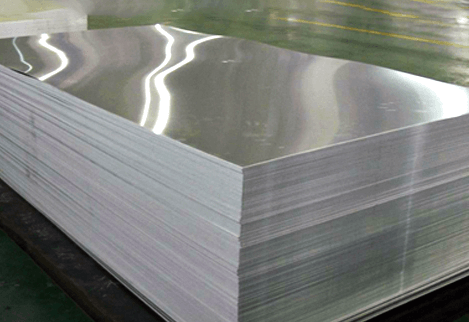
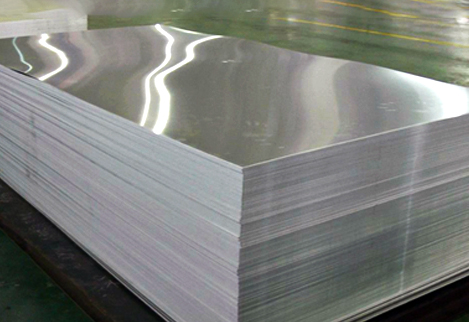
Features and benefits of Aluminium sheets

In the construction field in recent years, metal products have been in considerable demand. Mostly, it is presented in several versions, the most popular of which, of course, is profiled. And precisely because of its relevance, many people do not notice such a material as an aluminum sheet.


Aluminum Sheet Singapore is traditionally used to construct buildings and structures, shipbuilding, automobile manufacturing, and even the food industry. Of particular importance is the aluminum sheet for builders. It is used for the arrangement of roofs, in the construction of trade pavilions and stalls, the arrangement of partitions. Aluminium Plate is an environmentally friendly material resistant to various negative external factors.

The Aluminium U Channel can be noted as a large number. On the surface, you can easily apply a drawing that will be visible from a long distance. This is useful for creating promotional images. This material is used for the manufacture of various refrigeration equipment. Walls, floors, radiators, etc. are made from it, since the material has the necessary thermal characteristics. Also, it has anti-slip qualities, which is important for safety.

The widespread use of aluminum in various fields is associated with its properties: lightness, low density, corrosion resistance in atmospheric air, high thermal and electrical conductivity, ductility. Metal Fabrication Singapore is easily processed in such ways as forging, stamping, rolling.

The aluminum is also ease of processing and installation, low cost. Using various types of processing, aluminum sheet, aluminum profile, C Channel is made from aluminum.

First of all, buyers are attracted by the relatively low cost of sheets. For productivity, it seems that the aluminum sheet is inferior to products made from other types of metals. Simultaneously, the price of aluminum foil is quite low, so it can be used for domestic needs.

Also, it should be said that the aluminum sheet is environmentally friendly. It does not contain toxic substances in the composition, minerals, or anything else. Thus, aluminum products are used rationally, even in children's rooms, if applicable.

One of the most popular aluminum products is a corrugated sheet used to create a roof and other structures.

Advantages of the I Beam Size sheets: lightweight, flexibility, and ease of use in the structure. A product of this type is often used to build a roof for various types of buildings.
Also worth mentioning are anodized sheets, which may have a matte, semi-matte, and mirrored surface. In most cases, this product is used to create blinds, household fixtures, decorative structures, and parts for solar panels. Mirror sheets are also known for excellent reflective properties.

Making aluminum sheet
The creation of products of this type requires the use of technology for the heat treatment of metal and cold rolling. This allows you to get a sheet without defects - chips, bumps, cracks, and so on. The following varieties of the product are divided: plated, without heat treatment, annealed, hardened, caked, and half-cured.

Metal Sheet Singapore also distinguishes two main groups: manufacturing accuracy and standard/high finishes.

Areas of use of aluminum sheet

The aluminum sheet is used in many areas of production. This product is used to create building structures and decorative decoration. A product of this category is often used to create equipment and vehicles. It is great for building stairs, overpasses, walkways, and flooring.